
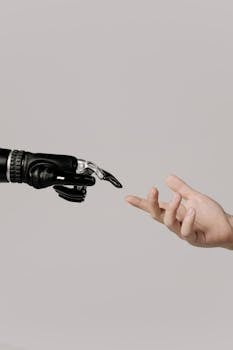
The question has shifted from “Can AI be creative?” to “What does it mean for humans to be creative when machines can do it too?” The rapid evolution of AI tools has sent shockwaves through the creative industries, sparking a debate that is both fascinating and unsettling. From artists to writers to musicians, no creative field seems immune. So, is the future of creative work truly in the hands of machines, or is this the dawn of a new, collaborative era?
AI as a Creative Co-Pilot: A New Partnership
The most significant change isn’t replacement; it’s a new form of partnership. Today’s generative AI models are not just creating content—they are acting as powerful co-pilots that can assist and accelerate the creative process.
- For Writers: Tools like Grammarly and Claude go beyond grammar checks, assisting with content generation, brainstorming outlines, and even drafting sections of text. This frees up writers to focus on higher-level narrative and conceptual work.
- For Artists and Designers: AI platforms such as Midjourney, Adobe Firefly, and DALL-E have democratized art creation, allowing anyone to generate stunning visuals from simple text prompts. Professional artists are using these tools to quickly prototype ideas, generate variations of a concept, or create new textures and backgrounds that would be time-consuming to produce manually.
- For Musicians: AI composers like AIVA and Suno can generate original music in various genres, from classical to pop. The Beatles’ “Now and Then,” which used AI to isolate John Lennon’s voice from an old demo, proved that this technology can even bring new life to historical recordings.
The Uniquely Human Element
Despite the incredible capabilities of AI, a key part of the “human vs. machine” debate revolves around what AI cannot replicate: genuine human experience and emotion.
AI systems are trained on vast datasets of existing human-created work. They can learn to mimic styles and patterns, but they don’t possess consciousness, life experiences, or the capacity for true innovation that comes from a lived perspective. A machine can’t feel heartbreak, express personal trauma, or experience a moment of profound joy. This is where human creativity, rooted in emotion and intuition, maintains its irreplaceable value. The machine can create the notes, but only a human can feel the music.
Ethical and Economic Implications
The rise of AI-generated content isn’t without its challenges. The creative industries are grappling with serious ethical and economic questions:
- Copyright and Data: Many AI models were trained on copyrighted works without the consent or compensation of the original creators. This has led to lawsuits and a growing debate over who owns the copyright to AI-generated art.
- Job Displacement: While some view AI as a tool, others see it as a direct threat. Studies show that entry-level creative jobs, such as stock photography, basic graphic design, and copywriting, are at a high risk of being automated, forcing professionals to adapt their skills.
The Future is Hybrid
The most likely future for creative work is not one where humans are replaced, but one where they evolve. Creative professionals who embrace AI as a tool will have a significant advantage. This shift is already creating new, hybrid career paths that bridge the gap between human and machine:
- AI Prompt Engineers: Specialists who know how to “speak” to AI to get the desired creative output.
- AI Content Curators: Professionals who refine and edit AI-generated material to ensure quality and consistency.
In the end, while machines can be programmed to produce remarkable results, they cannot replicate the uniquely human spirit that drives us to create. As technology continues to advance, the focus will shift from the sheer volume of output to the value of human-driven vision, purpose, and emotion. The future of creative work is not a war between human and machine; it’s a collaboration that promises to unlock a new frontier of artistic expression.
Ready to Learn More?
For an even deeper dive into this topic and to see these tools in action, be sure to check out my YouTube channel! We’ll explore hands-on tutorials, tech reviews, and more on how to navigate the future of technology.